Author: Mitchell A. Sobieski

Wisconsin farmers who backed Trump stand to gain welfare-style handouts thanks to his failed tariff war

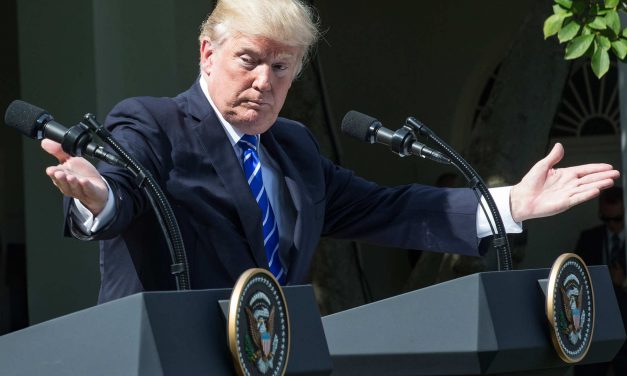
Donald Trump announced a proposed $12 billion farm aid package on December 8, marketing it as a lifeline for agricultural producers battered by trade disruptions, inflation, and volatile global markets. But the central fact remains unavoidable: this crisis was manufactured by Trump himself, not Beijing. His administration’s own tariff policies destabilized commodity prices, crippled access to the Chinese market, and forced farmers into the same government-dependent posture they often claim to reject – giving handouts to help others. What the White House now frames as relief is more accurately a reimbursement for self-inflicted wounds, financed by taxpayers who had...

Read More

How economic turmoil from Trump’s tariffs could trigger political shifts similar to prewar Japan

A century after the protectionist wave of the early 20th century reshaped global markets and contributed to geopolitical instability abroad, economists and historians say the United States may be entering another period in which domestic tariff decisions carry consequences far beyond the nation’s borders. The debate is unfolding at a moment when trade restrictions are framed as tools of leverage and economic strength, but analysts warn that the past shows how these choices can alter political trajectories in vulnerable regions long before the effects become visible to the public. The pattern is not new. During the 1920s, successive Republican...

Read More

Russia outlines plan to rebuild its armored forces in preparation for large-scale war with NATO

In its most recent intelligence assessment, the Institute for the Study of War (ISW) reported that Russia’s defense industry is pursuing a long-term effort to expand T-90 tank production and reestablish its pre-war tank reserves, signaling intent to maintain a sustained military threat to the North Atlantic Treaty Organization. Internal documents published on October 11 by Frontelligence Insight, an open-source intelligence group based in Ukraine, show that Russia’s primary tank manufacturer, Uralvagonzavod, has outlined plans to increase T-90 production by 80 percent by 2028 compared to 2024 levels, while also initiating production of a new variant called the T-90M2,...

Read More

A diminished Russia risks losing control of Far East territory as China and North Korea expand influence

Russia’s remote Far Eastern territories are becoming the focal point of what Ukrainian intelligence describes as a gradual foreign takeover, with China and North Korea tightening their economic and demographic grip on a region that makes up nearly half of the Russian Federation’s landmass. According to a recent assessment by Ukraine’s Foreign Intelligence Service, Moscow’s inability to sustain development in the Far East is leaving vast swaths of territory open to outside control. The agency warned that, over time, the Kremlin could lose effective authority over as much as 40 percent of its national territory. That is an area approaching...

Read More

A Confederate Disneyland: Why the culture war conditions are ripe for an “America First” theme park

In 1993, The Walt Disney Company announced a plan to build a new kind of theme park that wouldn’t take visitors to space, under the sea, or into fairy tales, but into the nation’s dark and troubled past. “Disney’s America,” a $650 million history-themed park, was to be constructed in northern Virginia, just miles from Civil War battlefields like Manassas and within shouting distance of Gettysburg. It was marketed as a bold effort to let families “feel the story” of America. Instead, it became a national controversy. The backlash came from across the political spectrum. Historians, preservationists, local officials,...

Read More

Russia’s shrinking empire: How Putin’s brutal war in Ukraine has made Moscow a vassal state of Beijing

When Russian troops crossed into Ukraine in February 2022, Vladimir Putin declared the moment would reshape the world order. The brutal dictator cast the invasion as an assertion of national strength — a stand against Western dominance and a bid to restore Moscow’s stature as a global power. Nearly four years later, that ambition has continued to backfire. Russia’s war has drained its economy, depleted its military, and forced it into an uneasy dependency on China, transforming what once was a strategic partnership into a relationship of subordination. Beijing now stands as Moscow’s economic lifeline, diplomatic shield, and technological...

Read More