
Author: Noria Doyle

Legal challenge to birthright citizenship revives Korematsu’s warning on who counts as an American

The question “Am I an American or am I not?” was uttered more than eight decades ago by Fred Korematsu as the federal government prepared to remove him from his home under military orders during World War II. It was not a philosophical exercise or an abstract appeal. It was the plea of a U.S.-born citizen confronted with a government that suddenly decided his rights were conditional. His question endures because it captures a recurring conflict in the nation’s history. It asks who this country chooses to recognize as fully American, and who it marks as an exception. That...

Read More

From Bavaria to Milwaukee: A Christmas devil’s long march into local German-American traditions

Krampus, the horned companion to St. Nicholas, had been part of the Alpine winter landscape for centuries before German-speaking immigrants began arriving in Milwaukee in significant numbers during the 19th century. In Austria, Bavaria, and surrounding regions, the figure’s role was well established: appearing on the eve of St. Nicholas Day, December 5, to mete out punishment to misbehaving children while St. Nicholas rewarded the well-behaved. The tradition’s origins were older than its Christian framing. Folklorists traced elements of Krampus to pre-Christian Alpine customs, where midwinter processions featured animalistic, sometimes demonic figures meant to ward off evil spirits and...

Read More

Why beloved series like “Stranger Things” falter at the finish line and leave fans questioning the journey

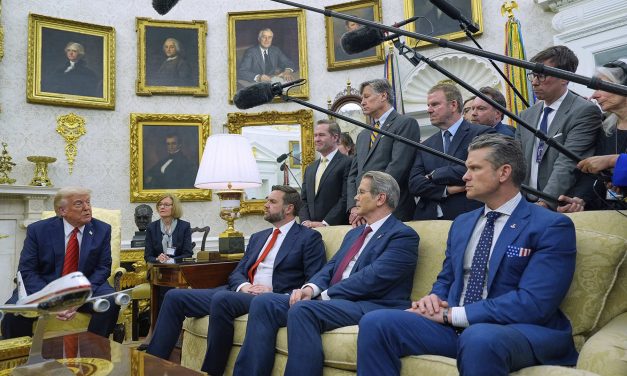
After nearly a decade on the air, “Stranger Things” has become one of the rare series that viewers grew up alongside. Fans watched the cast age from children to adults as the story unfolded across historic political, cultural, and technological shifts. The show that premiered in the summer of 2016 now concludes in a dramatically different world, with Donald Trump once again occupying the White House. That passage of time, and the emotional investment built over ten years, shaped expectations for the final season, making its reception more charged than any moment since the series began. When the fifth...

Read More

Global tourism surges with post-COVID demand as the U.S. suffers under Trump’s adversarial policies

The global tourism surge reshaping travel economies in 2024 and 2025 is rooted directly in the long freeze caused by the COVID-19 pandemic, which suppressed international mobility for more than two years and created unprecedented pent-up demand among travelers worldwide. As restrictions were fully lifted and borders reopened, a delayed wave of trips collided with restored airline capacity, favorable currency shifts, and aggressive marketing from tourism-dependent economies. The result has been one of the fastest expansions of international travel since modern recordkeeping began, with destinations across Asia and Europe seeing historic highs while the United States struggles to attract...

Read More

Hachikō the Akita: What a Japanese dog’s loyalty can teach Milwaukee about duty and everyday compassion

More than a century after his death, Hachikō the loyal Akita remains one of Japan’s most enduring symbols of faithfulness. His bronze statue outside Shibuya Station is a pilgrimage site for tourists and commuters alike, a daily reminder of a dog’s devotion that transcended both time and loss. As Japan marks his birthday on November 10, the story resonates far beyond Tokyo, even offering quiet lessons for communities half a world away, like Milwaukee, about constancy, connection, and the meaning of loyalty in an age of distraction. Born in 1923 in Akita Prefecture, Hachikō (ハチ公) was brought to Tokyo...

Read More

Why Conservatives fake outrage against Chinese drugs but ignore Russian bullets killing Americans

For years, American politicians on the right have sounded the alarm over Chinese-manufactured fentanyl making its way into the U.S. drug supply. They have accused China of fueling an overdose crisis and framed the flow of chemicals as a form of foreign aggression. Entire policy platforms have been built on the premise that when a foreign country enables the deaths of American citizens, it is not only a public health issue, but a national security threat. Yet when it comes to the flow of Russian-made ammunition into the United States, bullets used in civilian firearms, military-style rifles, and potentially...

Read More