

Racine Art Museum (RAM) announced a new exhibition on September 28 that will ask Wisconsin residents to look at familiar places with the visual curiosity of a film set, turning lighthouses, beaches, supper clubs, summer camps, roadside attractions, and historic buildings into possible scenes from the cinematic world of Wes Anderson.
The exhibition, “Accidentally Wes Anderson: Adventures in Wisconsin,” will run February 24 to June 13, 2027, at RAM. Presented in partnership with the popular brand and digital media platform Accidentally Wes Anderson, the show will mark the Midwest premiere and invite the public to help shape how Wisconsin is seen inside the museum.
Wes Anderson is an American filmmaker whose work is known for precise symmetry, saturated color, carefully composed interiors, deadpan humor, and stories about lonely, wounded, or eccentric people trying to make sense of family, memory, and belonging.
His films often look like illustrated storybooks or museum dioramas brought to life, with every costume, building, prop, and background detail arranged to create a world that feels nostalgic, artificial, and emotionally exact.
Anderson’s most recognizable films include “Rushmore,” “The Royal Tenenbaums,” “The Life Aquatic with Steve Zissou,” “Fantastic Mr. Fox,” “Moonrise Kingdom,” “The Grand Budapest Hotel,” “Isle of Dogs,” “The French Dispatch,” and “Asteroid City.”
“Moonrise Kingdom,” his 2012 film about two young runaways on a New England island, is especially relevant to the RAM exhibition because its summer-camp setting, coastal landscapes, uniforms, maps, tents, boats, and storybook sense of adventure helped define the visual vocabulary that many viewers now associate with places that visually resemble his aesthetic style.
RAM and Accidentally Wes Anderson began accepting public submissions on September 28 from residents and visitors who have photographed places in Racine, Southeast Wisconsin, and across the state that reflect the filmmaker’s recognizable visual language.
The call for submissions remains open through November 15, 2026. Selected photographs will be included in the exhibition, shared with Accidentally Wes Anderson’s online community, or both.
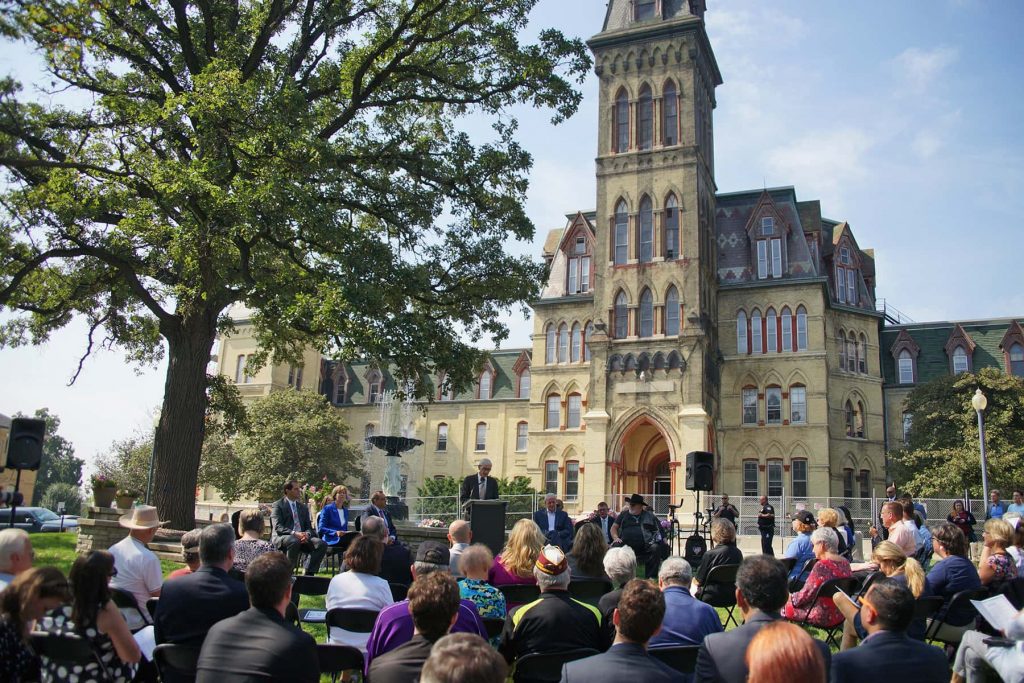
“Racine is perfectly suited to this collaboration, with its offbeat local charm — from idyllic lighthouses and white sandy beaches to Frank Lloyd Wright architecture and 19th-century landmarks,” said Robb Woulfe, executive director of Racine Art Museum. “We’re excited to bring these places into conversation with RAM’s collection, inviting visitors to see familiar locales differently and discover our artworks in new ways.”
The project is rooted in the idea that Wisconsin already contains the strange balance of order, nostalgia, and eccentricity that has made Accidentally Wes Anderson a global visual phenomenon. The platform, founded in 2017 by Wally and Amanda Koval, began as a personal Instagram project inspired by travel and discovery.
It has since grown into a community of more than 2 million travelers, photographers, designers, artists, and cultural explorers who share images of real places that appear to belong in Anderson’s distinctive cinematic universe.
The appeal is not limited to buildings that resemble movie sets. Accidentally Wes Anderson celebrates symmetry, color, composition, and unexpected details — the qualities that can make a train station, resort, ferry terminal, old hotel, roadside sign, or civic landmark feel at once ordinary and theatrical.
“We are eager to bring this exhibition to RAM and explore the places that make Wisconsin so special, including retro supper clubs, summer camps, and roadside attractions,” said Wally Koval, co-founder of Accidentally Wes Anderson. “Our team loves getting lost in all the amazing submissions the AWA Community sends our way, and we cannot wait to see what people uncover in the Badger State.”
RAM’s Wisconsin exhibition will use that visual vocabulary to invite a broader search for places that residents may pass often but rarely study closely. That local emphasis gives the exhibition a civic dimension beyond the appeal of a popular internet aesthetic. Racine’s lakefront, industrial history, architectural landmarks, and smaller-scale visual surprises offer the museum a setting that can function as both subject and host.
Rather than presenting Wisconsin as a backdrop, the exhibition will ask photographers and visitors to consider how the state’s built environment carries its own sense of character, memory, and design.
The museum’s role will be curatorial as well as participatory. “Adventures in Wisconsin” will pair Accidentally Wes Anderson imagery from around the world with community-sourced photographs of greater Racine and Wisconsin.
RAM will also draw from its own collection and borrowed works, arranging sculpture, jewelry, works on paper, artistic taxidermy, miniatures and other curiosities into cinematic vignettes inspired by Anderson’s visual language.
The approach follows several months of institutional changes at RAM, which has been working to expand access and strengthen its public role in Racine County. In August, the museum announced free general admission for Racine County residents, expanded hours at RAM Downtown and a refreshed brand identity anchored by the tagline “Make it yours.”
The changes positioned the museum as a more open civic space, rather than a destination reserved mainly for scheduled visits or traditional exhibitions. That shift continued in September with the launch of In/Between, a 10-day visual and performing arts festival that extended RAM’s programming into parks, galleries, restaurants, historic sites, and other shared spaces throughout Racine County.
“Drawing on the region’s legacy of making and innovation, we created In/Between to bring art into everyday settings through experiential exhibitions and place-based opportunities,” Woulfe said. “Our vision was to offer new ways to explore Racine’s architecture, landscapes, and creative life — and to invite people to see both the community and RAM from a different perspective.”
“Accidentally Wes Anderson: Adventures in Wisconsin” continues that place-based direction, but with a broader geographic reach. The exhibition will use Racine as an entry point into a statewide conversation about design, memory, tourism, and the overlooked visual appeal of ordinary places.
By asking the public to submit photographs, RAM is also inviting residents to participate in the interpretive work that museums typically reserve for curators. The exhibition will also extend beyond the gallery through related programs and activities, including film screenings, a postcard-writing station, and an interactive Adventure Guide.
The guide will feature a curated selection of Wisconsin destinations, encouraging visitors to travel through greater Racine and other parts of the state with the same attention to composition, detail and surprise that defines the exhibition.
For RAM, the exhibition offers another way to connect contemporary art, craft, and design with the community outside its walls. For participants, the invitation is more direct, asking visitors to look closely, frame deliberately, and decide what Wisconsin places deserve to be remembered.
The resulting exhibition will show more than a collection of Wes Anderson-like images. It will reflect what residents noticed, preserved, and offered back as evidence of place — one lighthouse, summer camp, supper club, landmark, and odd corner of Wisconsin at a time.