
Americans were fluent in public cruelty long before the decade of Donald Trump, but he changed the nature of how that cruelty took shape.
Now, when a child is torn away from a parent at the border, the reaction is not always horror. A family loses housing, and the response can be suspicion. A sick neighbor asks for caution during a public health crisis, and the answer may be defiance.
The result can look like a country full of people without empathy, and in everyday moral language, it becomes easy to call such behavior psychopathic.
But that label can conceal as much as it explains. Clinical antisocial personality disorder is not the same as the larger civic phenomenon of people learning to shut down their feelings. A person may lack empathy in a durable, pathological way. A person may also have empathy buried under fear, humiliation, exhaustion, grievance, or trauma.
At social scale, the distinction matters because a culture can train people to perform indifference even when emotional capacity has not disappeared.
America’s post-9/11 security state helped normalize that performance. Fear became a public virtue. Suspicion became civic responsibility. The pain of strangers was reframed as the necessary cost of safety.
Two decades later, the COVID-19 pandemic revealed a related pattern. A public crisis that demanded mutual care also produced open hostility toward vulnerability itself. Illness, disability, and grief became political irritants.
None of that required a nation of clinical psychopaths. It required a society practiced at converting fear into contempt.
Trauma helps explain some of the mechanics. Chronic stress can teach the nervous system that softness is dangerous. Children who grow up around instability, neglect, emotional volatility, or violence may learn to survive by becoming unreadable.
Feeling too much can become a liability. Trust can feel reckless. Compassion can feel like exposure. What looks from the outside like coldness may sometimes be a defensive system that formed before the person had language for it.
The research tradition around Adverse Childhood Experiences changed the way clinicians, educators, and public health workers understood those connections.
Childhood adversity was not merely a sad backstory. It was linked to later risks involving health, behavior, emotional regulation, and relationships. At the same time, the long American shift away from institutional mental health care left many communities with few durable systems for treatment, stability, or prevention.
The country learned how to describe a crisis after it erupted, but not how to recognize the slow construction of a crisis across a life or lifetime. That failure is cultural as much as clinical.
America’s political language today turns injury into character. Poverty becomes laziness. Addiction becomes weakness. Anger becomes badness. The traumatized child becomes the problem child. The immigrant child who cannot trust adults becomes difficult, ungrateful, or dangerous.
This is the old moral grammar of individualism. Every person is treated as the sole author of their condition, even when institutions, families, poverty, racism, violence, or state action helped write the first chapters.
That grammar has deep historical roots. The Protestant work ethic linked virtue with discipline, productivity, and self-control. The Reagan-era White Nationalist revival of market individualism sharpened that view into a political creed.
In such a framework, suffering must be overcome privately, and failure to overcome it becomes proof of defective character. Trauma complicates that story because it shows how behavior can be shaped before choice becomes meaningful. It does not erase responsibility for harm. It makes responsibility harder to understand without history.
The trauma most Americans recognize is usually dramatic, visible, and narratively clean. The Vietnam War gave the country one of its dominant images of post-traumatic stress. It was the combat veteran haunted by explosions, ambushes, and nightmares.
Film and television reinforced that script. Trauma became something that happened in a sudden event, preferably far from home, with a clear before-and-after narrative.
Complex trauma is harder for the collective cultural consciousness to see because it is often repetitive, relational, and domestic. It may come from years of emotional terror, neglect, coercion, instability, or captivity within ordinary-looking environments.
It may happen in homes, schools, workplaces, churches, detention centers, or neighborhoods where escape is limited, and authority is unavoidable. The domestic violence shelter movement helped make private abuse more publicly legible. But even that recognition has not fully changed the nation’s tendency to treat ongoing relational harm as less real than a battlefield experience.
The difference matters because prolonged trauma can alter not only memory but identity. The person may not remember a safe “self” before the injury. The survival response becomes part of personality, shaping trust, anger, attention, intimacy, and self-worth.
For immigrant children, that distinction is not abstract. State violence can become developmental material. A child who is detained, separated from a parent, moved through hostile systems, or taught that their family’s presence is a public threat absorbs danger as an organizing principle.
The lesson is carried in the body before it becomes an intellectual awareness. Adults may disappear, safety may be conditional, institutions may be predatory, and belonging may be revocable.
American history offers repeated warnings about that process. Native American boarding schools were built around the forced removal of children from families, languages, and cultures, with damage that extended across generations.
More recently, family separation under Trump’s Gestapo-style immigration enforcement showed how the U.S. government could turn children’s attachment bonds into instruments of deterrence. The immediate harm was visible in crying children, frantic parents, and legal chaos.
The longer-term harm is harder to photograph, because it involves mistrust, dysregulation, shame, fear of authority, and the unstable sense of self that can follow prolonged threat.
This is why traumatizing children is not only a moral failure. It is also a form of future planning. Children who grow up with chronic fear often become adults organized around survival. Some withdraw. Some explode. Some become suspicious, controlling, or numb.
Some seek belonging in rigid ideologies, abusive relationships, or groups that give their pain a target. None of those outcomes is automatic. But the risk is planted when a society chooses terror as seed policy and then pretends to be surprised by the violent harvest.
Complex trauma rarely stays private. It moves through families, schools, neighborhoods, workplaces, and politics. Emotional dysregulation can appear as rage or collapse. Chronic shame can become self-destruction or contempt for others. Damaged relationships can become isolation, coercion, or a constant search for enemies.
In communities shaped by redlining, disinvestment, and racially-driven policing, trauma is not merely individual memory. It is built into housing patterns, school quality, environmental risk, and access to care. In regions hollowed out by deindustrialization and the opioid crisis, despair often wears the face of personal failure while reflecting decades of economic abandonment.
That does not mean every act of cruelty should be excused as trauma. Explanation is not absolution. Adults remain accountable for what they do with their pain. But public life becomes dishonest when it treats harmful behavior as if it appeared from nowhere.
A country that refuses to understand injury keeps misidentifying symptoms as origins. The American default for processing such conditions has too often been punishment.
Mass incarceration turned a social crisis into a prison system. Zero-tolerance school discipline turned children’s distress into suspensions, expulsions, and police contact. Courts, schools and employers routinely encounter people after trauma has already reorganized their behavior, then respond in ways that deepen instability.
A child who needs regulation gets removal. A family that needs support gets surveillance. A worker who needs treatment gets fired. The system names the person as the problem and preserves itself as the answer.
Repair requires a different civic imagination. Canada’s Truth and Reconciliation Commission, focused on the abuses and legacies of residential schools, showed one model for documenting harm as a public record rather than treating it as private misfortune.
Trauma-informed care offers another framework, not because it is a slogan, but because it asks institutions to consider what happened to a person before deciding what is wrong with them. A society that mocks pain manufactures more of it.
Understanding trauma does not require sentimental forgiveness or clinical naïveté. It requires recognizing that cruelty has mechanics, that children absorb those mechanics before they can name them, and that public policy can either interrupt the cycle or cultivate future damage.
When a developed and economically powerful nation like the United States chooses fear, humiliation, and separation as political tools, it should not pretend the consequences belong only to the people it wounded.
Noria Doyle
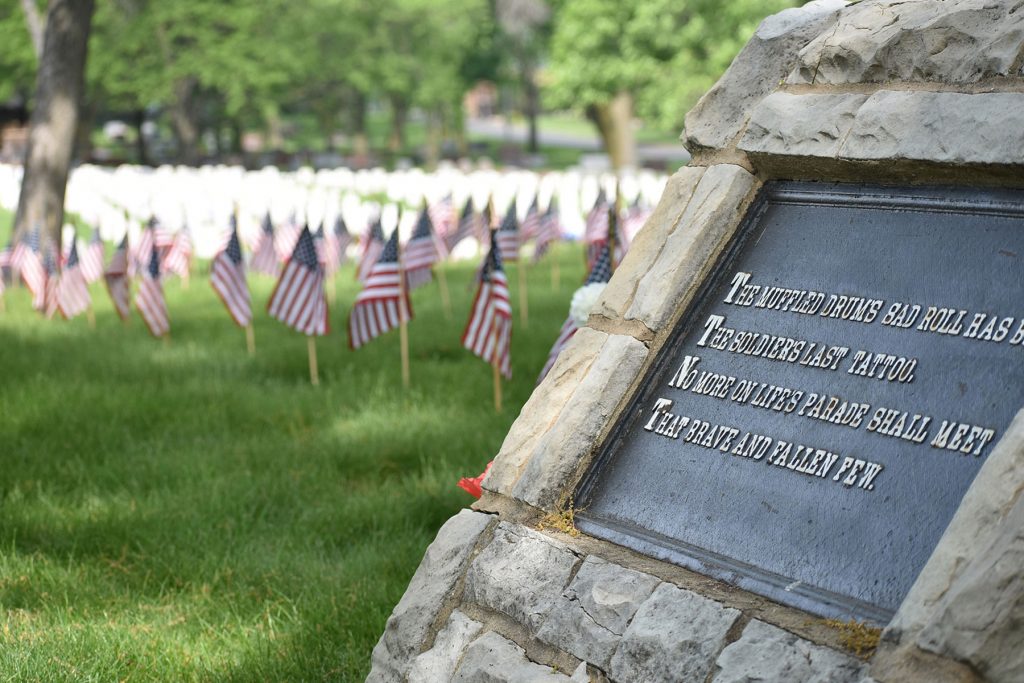
Image by Cora Yalbrin (via ai@milwaukee studio)
• created using generative AI and digital editing